Independently judged. Independently patented.
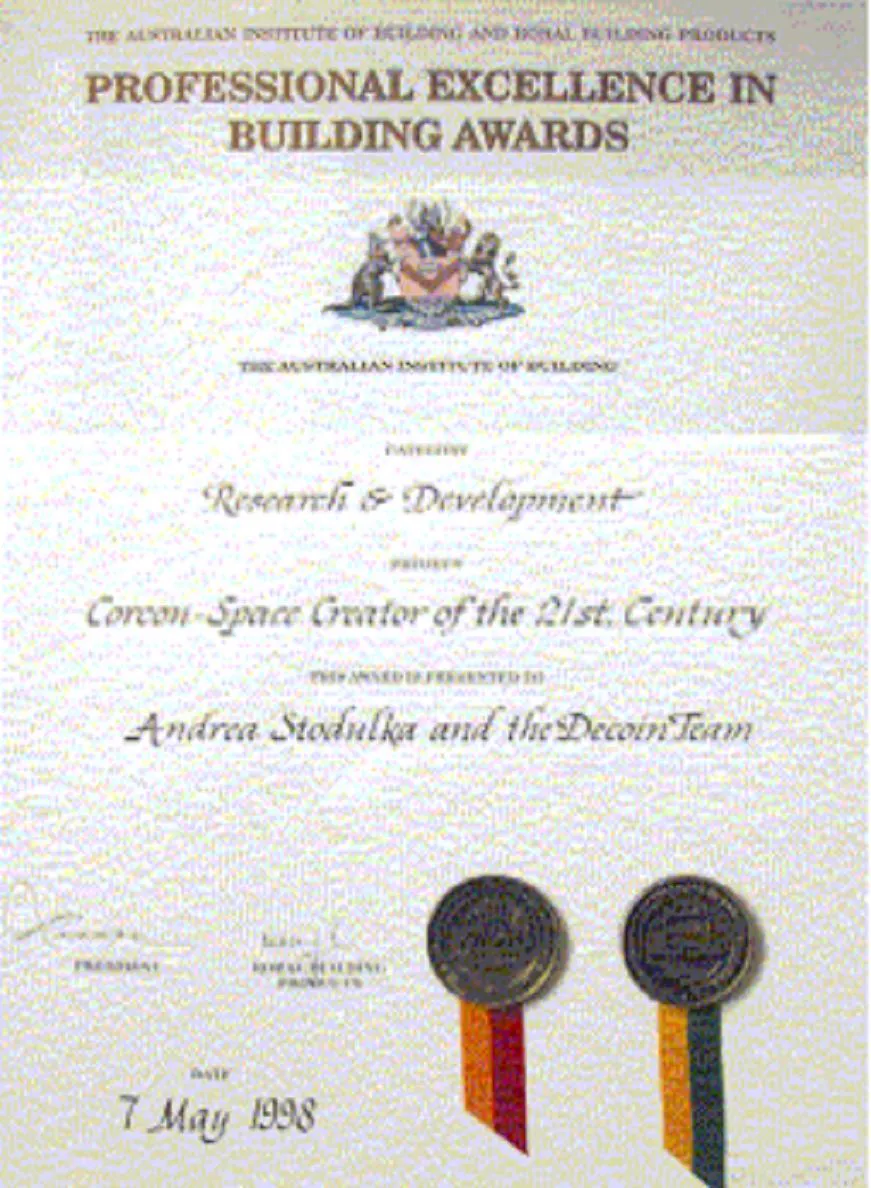
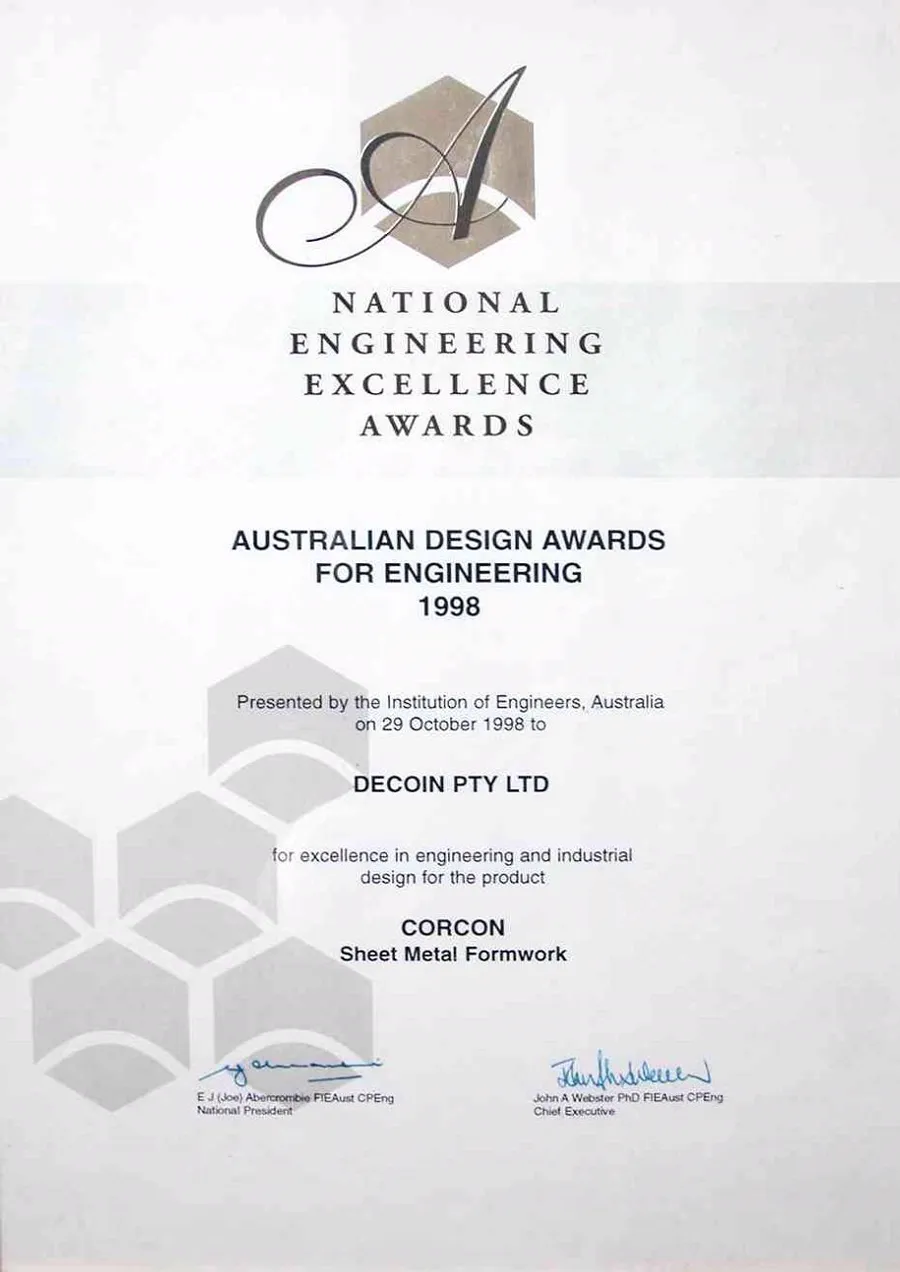
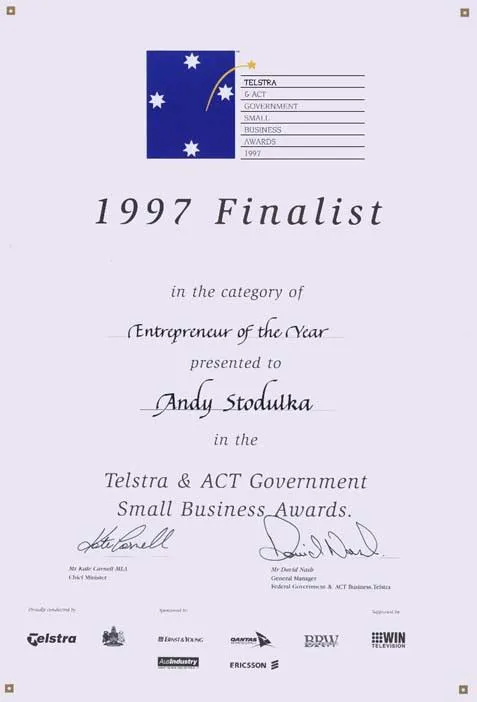
10 national engineering and industry awards, 1995–1999.
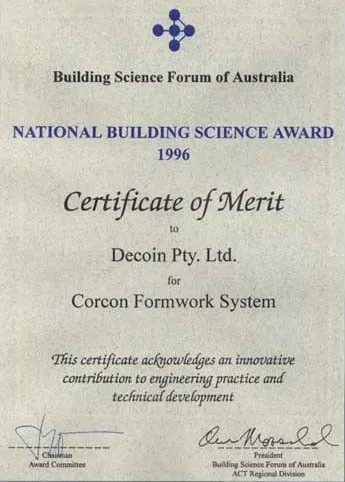
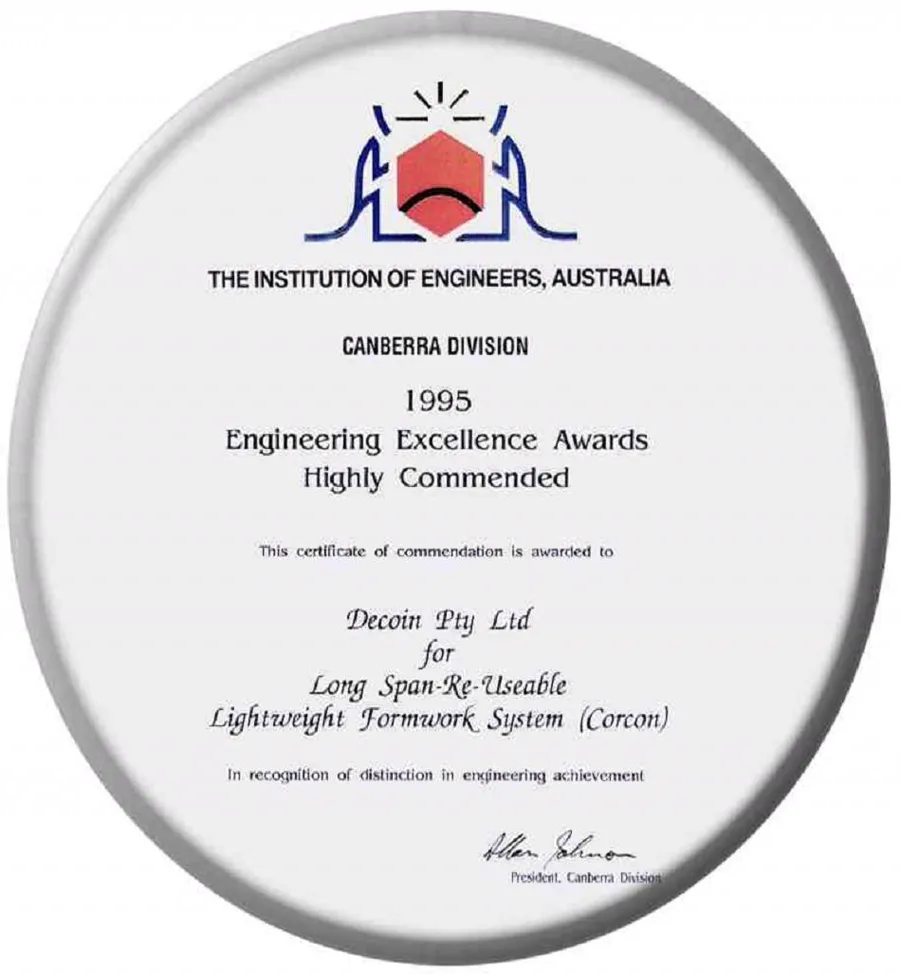
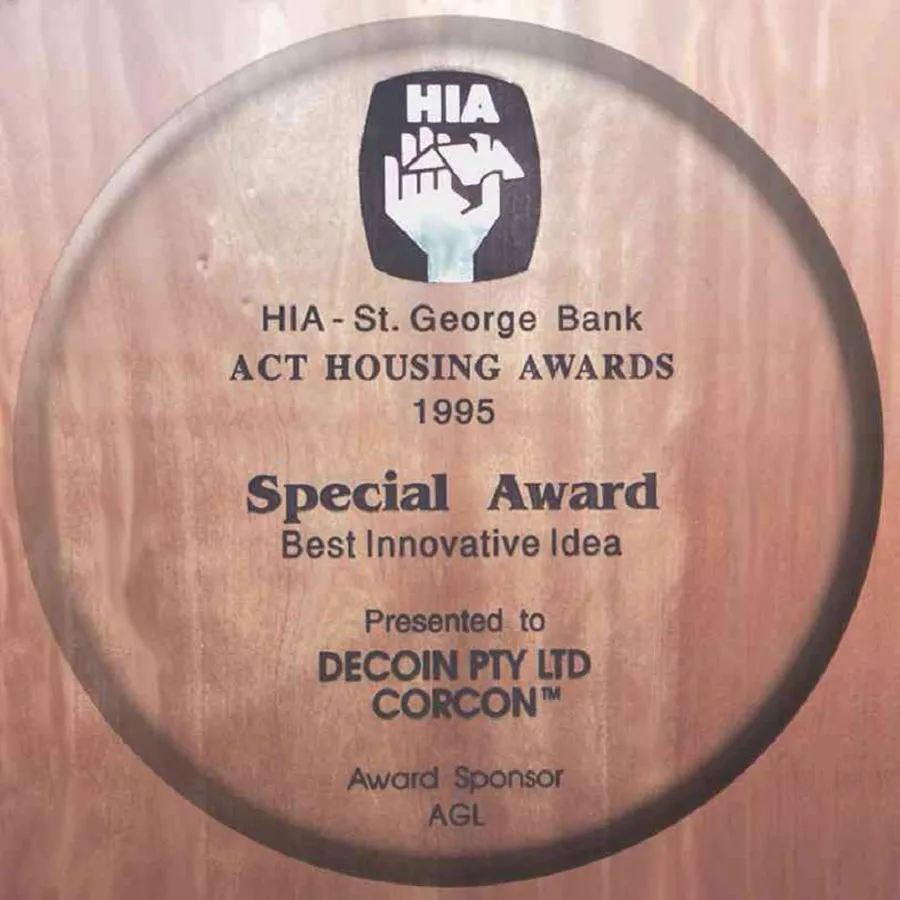
Before Corcon reached the field, the system was tested by Australia's own engineering and building institutions — winning or placing in ten separate national awards for engineering design, research and development, product innovation and energy efficiency.
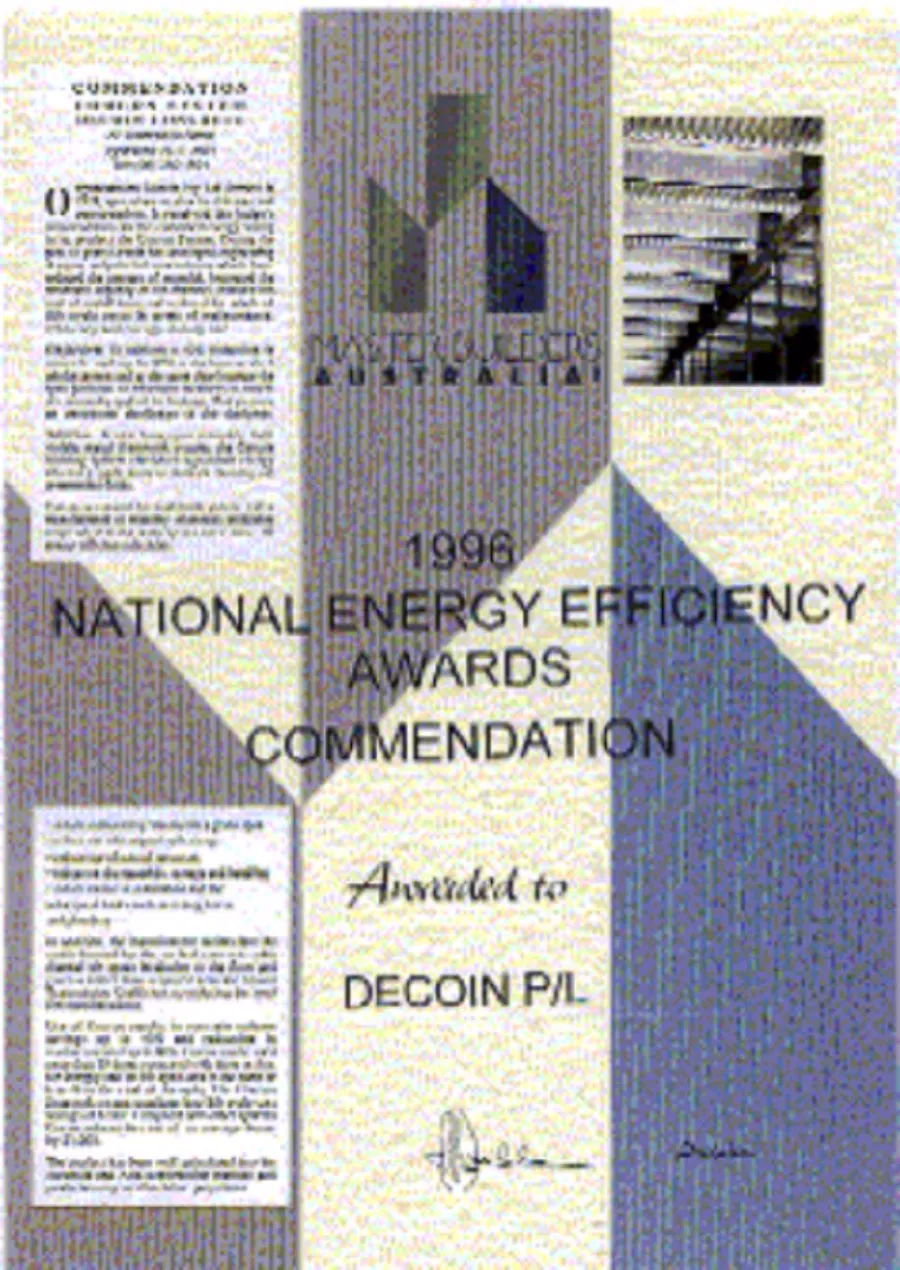
MBA National Energy Efficiency Award — Commendation.
Judges cited Corcon's objective of a 40% reduction in concrete and up to 50% reduction in steel reinforcement while extending span beyond common technology. The judges' commendation credited the system's energy-efficiency principles — reduced material volume per span, reduced transport and craneage, and reduced on-site labour — plus the added thermal air-space insulation and better-than-required acoustic performance the arched voids provide. The citation records that Corcon could be reused more than ten times, against three or four for formply, with life-cycle savings of $20 per m² and roughly $3,000 off the cost of an average house.
Award citation, MBA National Energy Efficiency Awards 1996 — Decoin Pty Ltd, Corcon System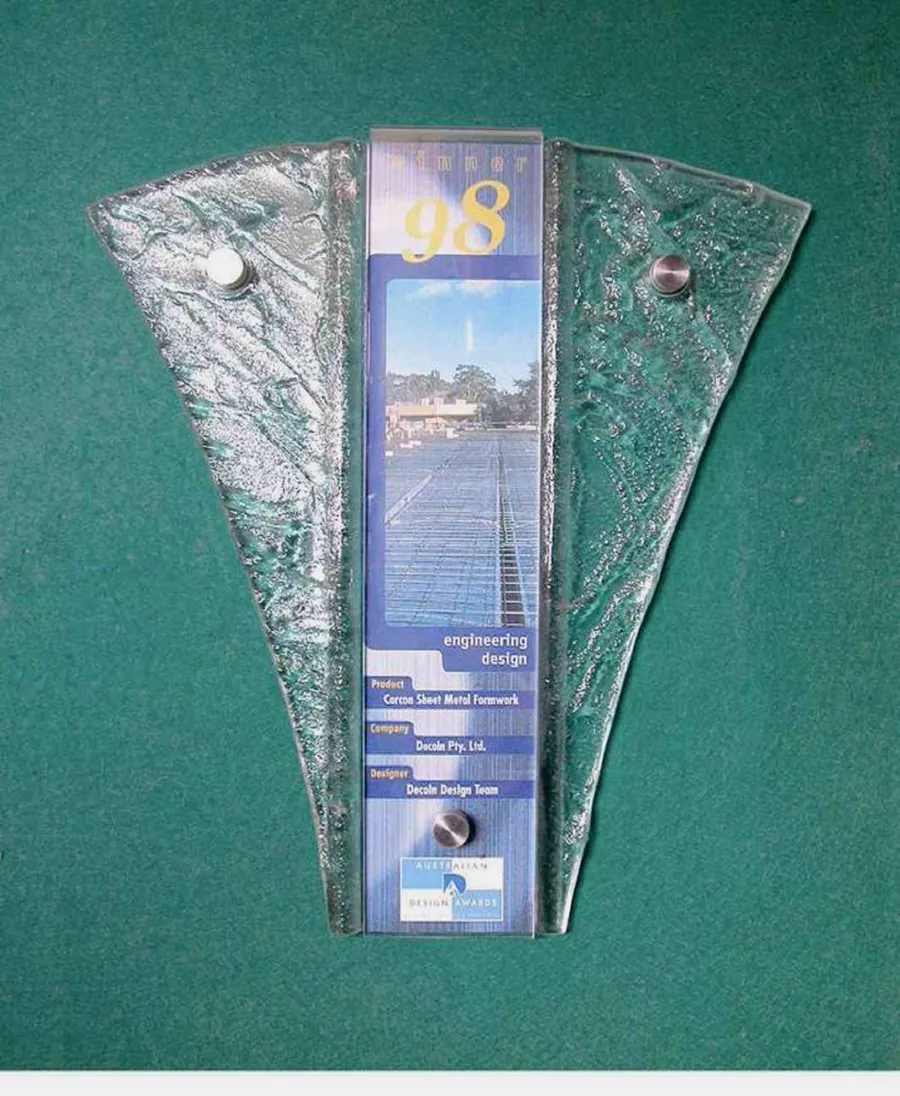

Patented in 17 countries and regions.
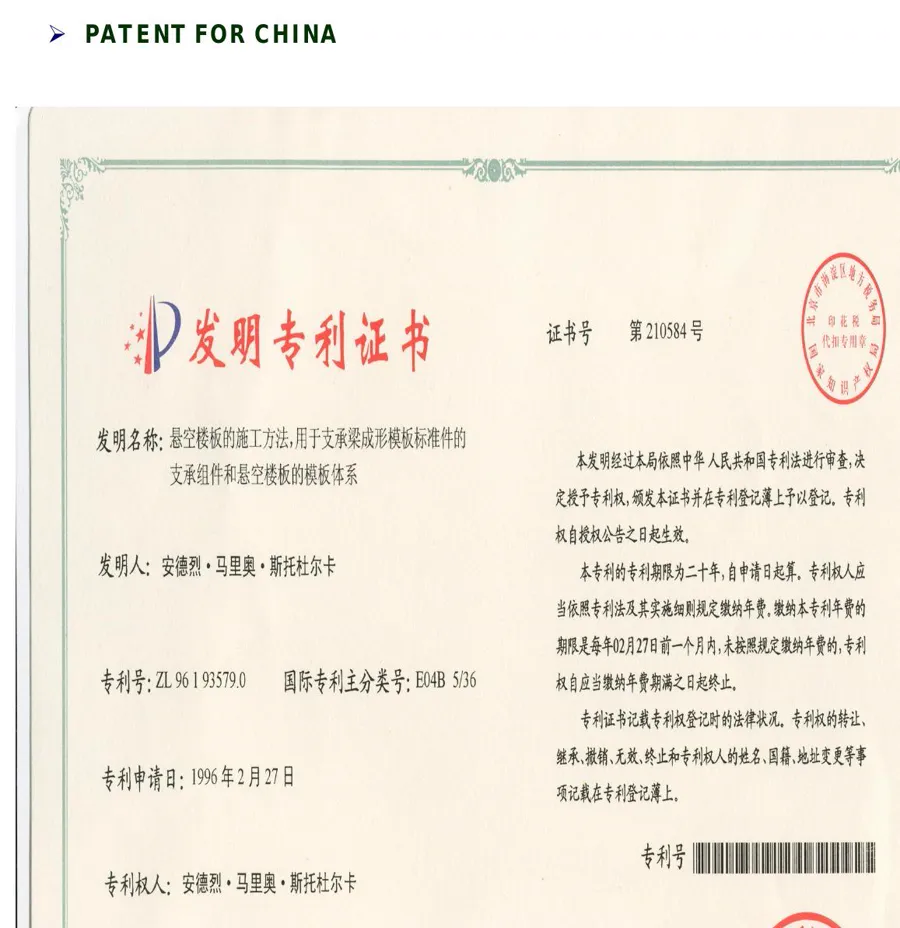
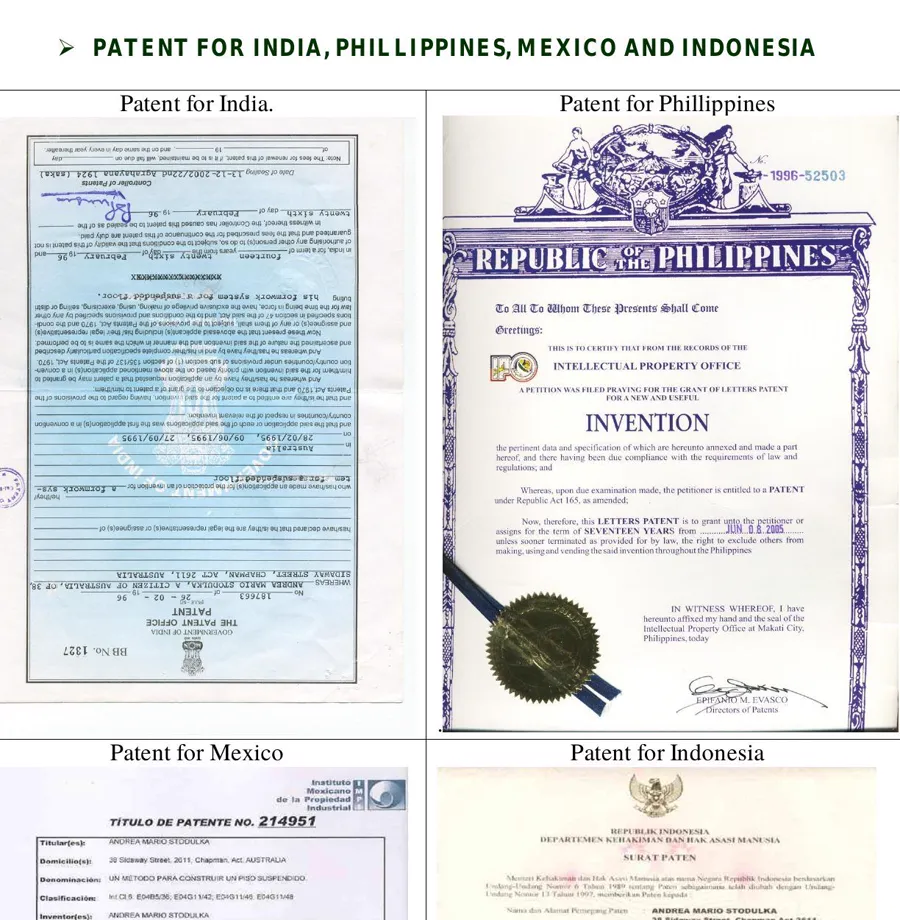
Andy Stodulka's suspended-floor formwork method was first filed as an Australian patent application in 1995, then separately examined and granted across 17 national and regional patent offices — each jurisdiction verifying the invention independently.
- Australia
- Brazil
- Canada
- China
- Europe
- Indonesia
- Japan
- Malaysia
- Mexico
- Philippines
- Poland
- Russia
- South Africa
- South Korea
- Turkey
- United States
- Vietnam
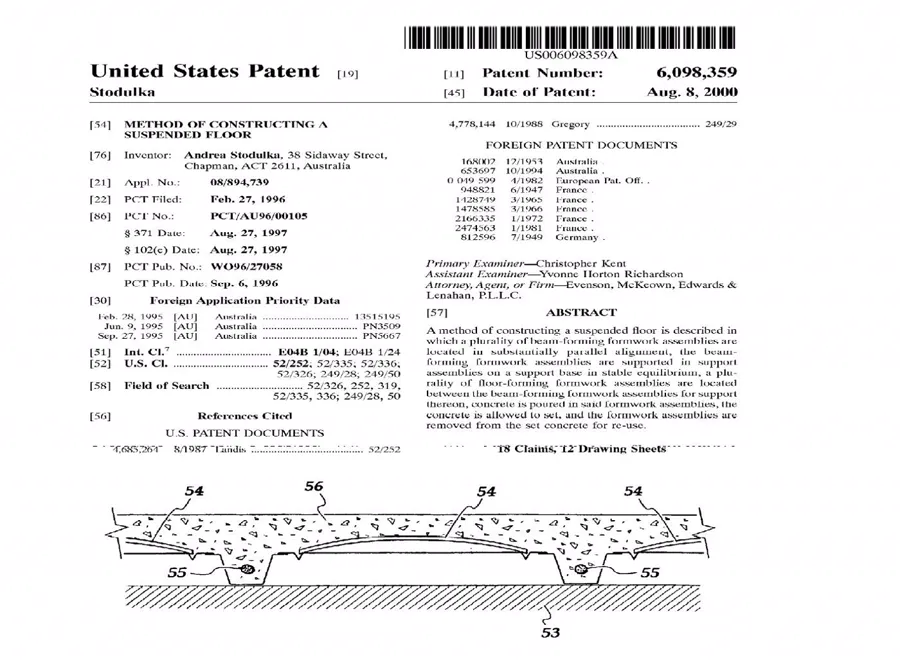
United States Patent 6,098,359
| Detail | Value |
|---|---|
| Title | Method of constructing a suspended floor |
| Inventor | Andrea Stodulka, Chapman, ACT, Australia |
| Date of patent | 8 August 2000 |
| International application | PCT/AU96/00105, filed 27 February 1996; published as WO 96/27058 on 6 September 1996 |
| Australian priority | 28 February 1995, 9 June 1995 and 27 September 1995 |
The patented cradle-like support bracket suspends the beam mould at its upper edges, with a base wider than its neck, so the downward force from workers on the formwork — or from the concrete itself — falls inside the bracket and cannot create an unstable turning moment. That geometry reduces set-up time, improves site safety and self-centres the beam. Standard beam-forming assemblies also accept reusable inserts to save concrete where a smaller beam is sufficient.